Bayyinat Academy
How to Make Wudu: A Beginner’s Guide and Practice Checklist
Wudu is a way of preparing for salah (prayer). When you are new to it, the easiest details to mix up are what to wash, what to wipe, and where washing stops. In one practice round, pay particular attention to your elbows and ankles, and to the difference between washing the face and wiping the head.
Request a free trialMeet the teacher and discuss a plan, with no commitment to subscribe.

What is this guide based on?
Surah Al-Ma’idah 5:6 on Tanzil mentions washing the face and hands and arms up to the elbows, wiping the head, and washing the feet up to the ankles. In Sahih al-Bukhari 159, Humran describes how Uthman ibn Affan demonstrated wudu, including washing the hands at the start and rinsing the mouth and nose.
The steps below are a practice guide based on that demonstration, not a list of what every school of Islamic law classifies as obligatory. If you have been taught a different detail, bring that specific question to a qualified teacher.
How to make wudu, step by step
Begin with the intention to perform wudu. The hadith on intentions is a reminder to know what you are setting out to do.
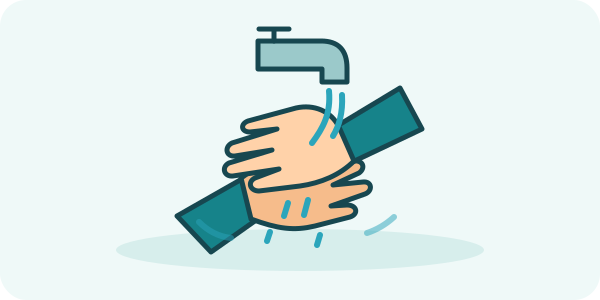
- Wash both hands at the start.
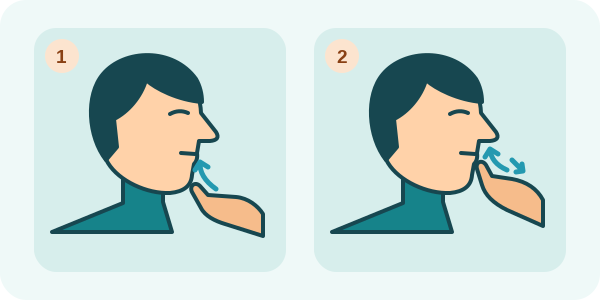
- Rinse your mouth. Gently draw a little water into your nose and blow it out.
- Wash your face.

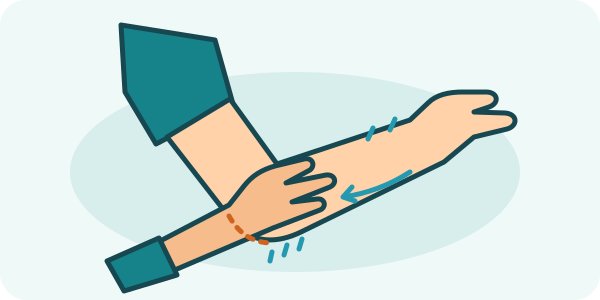
- Wash both arms from the hands up to and including the elbows. Do not stop short of the elbow.
- With wet hands, wipe your head. This step is a wipe, not washing the hair.

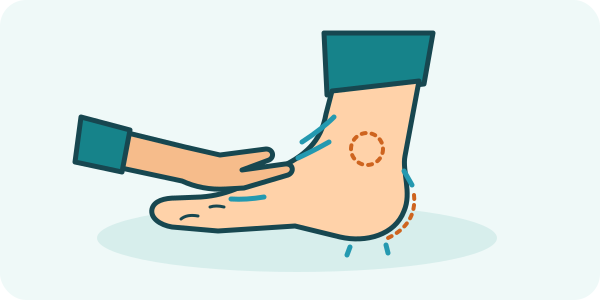
- Wash both feet up to and including the ankles. Check the heels as well.
Uthman’s demonstration describes washing several parts three times. Sahih al-Bukhari 157 also reports that the Prophet ﷺ performed wudu washing once at a time. Do not mistake the count in one demonstration for the only possible way to learn. Start by noticing whether the water reached the places you washed.
Before practising: read the drawing and ask about one movement
Instead of asking a learner to remember every step and name at once, show them the arm illustration and ask, “Where exactly is your elbow?” Let them point to it on their own arm. Then show the foot illustration. Have them point to the ankle by the foot joint and to the heel behind it. Knowing which part is which gives them a more useful observation than “I missed part of my foot.”
You can do this away from the water and move to a demonstration when the setting is suitable. Pointing at a picture or miming a movement isn’t wudu. It’s a way to find out what needs explaining before the demonstration.
Why distinguish washing the face from wiping the head?
If a learner says, “I washed my head the way I washed my face,” return to the two illustrations. Ask them to describe what they see: water is used to wash the face, while wet hands wipe the head. Don’t use that observation to judge a previous wudu. The point is to recognise the difference in action described in the verse on wudu and ask a qualified teacher about any details.
A three-point check after practising
Read the observation first and decide what you would check the next time you practise. These are examples for learning the motions, not rulings on whether a past prayer was valid.
| What you notice | What to check next time |
|---|---|
| You stopped just before the elbow. | Check that both elbows are included when you wash your arms. |
| You poured water on your hair as you did on your face. | Practise the difference: wash the face, wipe the head with wet hands. |
| You washed the tops of your feet but missed a heel. | Check that the water reaches the heel as well as the ankle. |
Check your understanding before the demonstration
| Ask before showing the answer | Check the answer |
|---|---|
| The illustration points to the elbow. Where does the guide show you finishing the arm wash? | Include the elbow itself; don’t stop just before it. |
| In the illustration of the head, do you pour water on the hair or wipe with wet hands? | The pictured step uses wet hands to wipe. |
| Where is the heel in relation to the ankle? | The heel is at the back of the foot. The ankle is by the foot joint. |
| Does the practice card tell you whether a previous wudu was valid? | No. Use it to note what you saw and ask a qualified teacher about the specific case. |
Practise with a child without rushing
Show the steps slowly, then let the child demonstrate them. Ask one question at a time: “Which part do we wipe?” or “Show me where washing the arm ends.” If they miss a step, practise that movement together rather than asking them to repeat the whole routine immediately. After the lesson, use our three-box home review card to note what they remember and one question for the teacher.
A low-pressure way to practise at home with a child
Let the child pick an illustration they want to explain. If they choose the arm, have them show you the elbow, then watch one attempt without interrupting every detail. Afterwards, give them one specific observation: “I saw you get close to the elbow. Next time, show me the elbow itself.” Make that movement the focus of the next round rather than starting the entire quiz again.
At the end, swap roles. Let them ask “Is this washing or wiping?” or ask you to point to the place in the drawing. Their response can help you tell whether they understood both the word and the movement, or only one of them.
What should I write down for the teacher?
Describe what you noticed without making a ruling. For example: “I can identify the ankle and heel in the drawing, but I forgot to look at the heel during the demonstration. Could you watch that step?” If your question concerns a previous wudu or a particular circumstance, explain the situation rather than guessing from the illustration.
How to use the drawings without just memorising the pictures
Cover the caption and let the learner explain what they see. If they pick the foot drawing and say “Here’s the ankle,” have them point to it and then find the heel. Put the drawing away and ask them to show the same place on their own foot. That transfers the information from the picture to something they can notice during the demonstration. If they can say the right word but can’t point to the place, go back to the drawing before practising with water.
The same activity can help an adult encountering the Arabic terms for the first time. Give them the word they’ll hear in the lesson, then let them connect it to the picture and action. If they previously learned a different detail, write down the question: “I learned this step another way. Can you help me understand the difference?” Discuss the detail with a qualified teacher rather than treating the practice drawings as a ruling.
When to ask a teacher
If you are unsure which details to follow, or want to know what to do about a mistake in wudu you already made, describe the exact situation to a qualified teacher instead of relying on the practice checklist. In Bayyinat’s Islamic Studies course, learners can practise wudu while a teacher explains the steps and corrects their application. If you are choosing a starting topic for your child, see where to start in Islamic Studies, or request a free trial and mention the step you want to practise first.